


Jewellery Care Guide Sterling Silver Tarnish Elastic Bracelet Restringing
Jewellery Care
Authoritative Guidance from Links London
Jewellery care at Links London is approached as stewardship. This guidance addresses the most common surface and structural concerns in sterling silver jewellery and elastic-constructed bracelets.
Sterling Silver Tarnish
Why Does Sterling Silver Turn Dark?
Sterling silver is composed of 92.5% silver and 7.5% copper. Surface darkening occurs when silver reacts with sulphur compounds present in the atmosphere, forming silver sulphide on the surface.
This is a natural chemical reaction. It affects appearance only and does not compromise purity or structural integrity.
Why Does Tarnish Develop Faster for Some People?
- Humidity and temperature fluctuation
- Urban air pollution and sulphur exposure
- Individual skin chemistry
- Cosmetics, fragrance and skincare products
- Storage conditions
Two individuals wearing identical jewellery may experience different oxidation rates. This reflects environmental chemistry rather than quality differences.
How to Remove Silver Tarnish Safely
For light surface oxidation:
- Use a soft, non-abrasive silver polishing cloth
- Polish gently without excessive pressure
- Avoid circular abrasion on detailed areas
Avoid harsh chemical dips, abrasive pastes and aggressive mechanical polishing. Over-polishing removes surface detail over time.
Heavy or intricate tarnish may require professional polishing to preserve definition and hallmarks.
Can Tarnish Be Prevented?
Tarnish cannot be fully prevented, but it can be moderated by:
- Storing pieces separately
- Allowing airflow rather than sealing in damp plastic
- Removing jewellery before swimming or bathing
- Wearing silver regularly
Permanent brightness is not the objective. Preserved integrity is.
Elastic Bracelet Construction
Why Elastic Bracelets Stretch Over Time
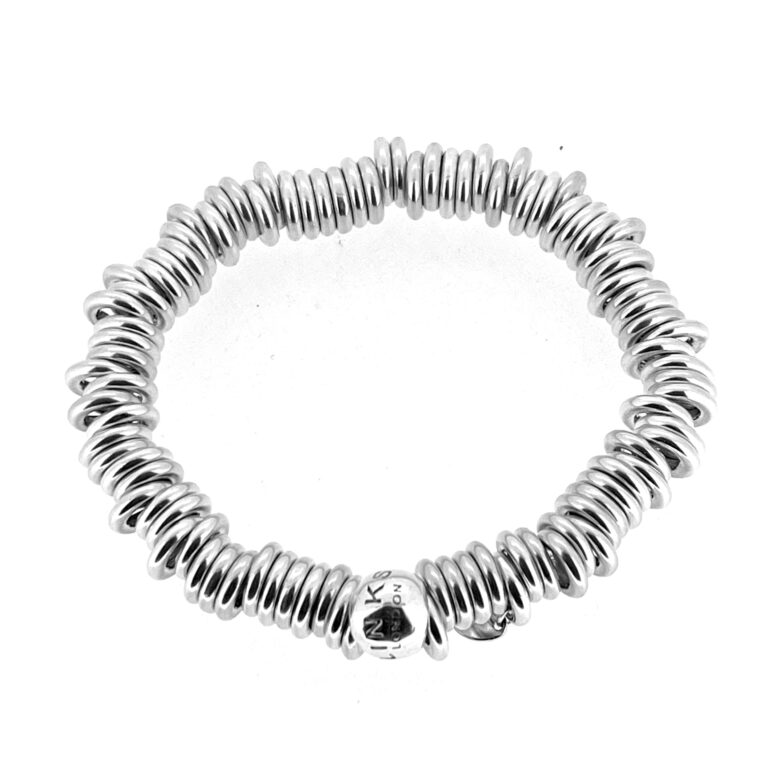
Sweetie-style bracelets and similar articulated designs may be constructed using high-tensile elastic to allow flexibility without visible clasps.
Elastic is a wearable structural component. Over time, polymer fibres lose resilience due to repeated tension and environmental exposure.
Signs an Elastic Bracelet Needs Restringing
- Noticeable looseness
- Reduced recovery after stretching
- Visible thread separation
- Gapping between links
Elastic rarely fails without warning. Proactive restringing prevents sudden component loss.
How to Extend Elastic Lifespan
- Roll gently over the hand rather than pulling sharply
- Avoid overstretching
- Remove before swimming or bathing
- Store unstretched
The silver components remain structurally sound. It is the internal tension system that fatigues over time.
Storage Guidance
Best Practice Storage for Silver Jewellery
- Store pieces individually
- Avoid contact with rubber and wool
- Keep in breathable conditions
- Limit prolonged humidity exposure
Airtight plastic can trap moisture. Balance is preferable to over-sealing.
When Professional Intervention Is Required
Seek professional assessment if:
- A setting feels loose
- A clasp fails to close securely
- Elastic has significantly softened
- Structural distortion is visible
Surface patina alone does not require correction. Structural compromise does.
A Considered Standard
Jewellery does not require constant correction. It requires proportion.
The aim is not permanent newness, but preserved structure — so that jewellery remains worn, kept and valued over years rather than seasons.
